Top Nutrition Coaching is fully dedicated to providing its readers with transparent, accurate, and compassionate information that applies to individuals from every demographic. Our nutritionists adhere to specific guidelines when creating content to ensure that all published materials are most advantageous to our readers. Top Nutrition Coaching has a no-tolerance policy regarding plagiarism.
All materials published by Top Nutrition Coaching adhere to the criteria outlined below:
- When possible, Top Nutrition Coaching only uses primary sources. Only peer-reviewed journals and government and state sites will be used if primary sources are unavailable.
- Our team reviews every article on the Top Nutrition Coaching site on a periodic basis. Our regular review process ensures that we constantly communicate the most up-to-date information about nutrition, health, and wellness.
- All of our content will be thorough and factual but also approachable. Our goal is to help readers learn about nutrition, not to confuse them.
- All of our content is verified by nutritionists and dietitians with certifications and advanced degrees. Every article will include a registered nutritionist or dietitian’s byline.
- None of our content will include false promises or guarantees. Our number one priority is supporting our audience and their health – their needs come first.


How Does Zepbound Work? The Dual-Hormone Mechanism Behind Tirzepatide
Zepbound (tirzepatide) acts on two gut hormones, GLP-1 and GIP. This guide explains what that does in the body, what the SURMOUNT trials found, and how nutrition support can help while you take it.

Key Takeaways
Key Takeaways
- Zepbound (tirzepatide) mimics two gut hormones, GLP-1 and GIP, while semaglutide mimics only GLP-1.
- It slows digestion, increases fullness, and supports insulin release after meals.
- In clinical trials, average weight loss ranged from about 15% to 21% depending on dose, and many people regained weight after stopping.
- GI side effects are common, especially when starting or increasing a dose.
- Eating enough protein and staying hydrated matter on Zepbound, and many plans cover nutrition counseling at no cost — check if your insurance covers a dietitian.
The best way to answer the question, "How does Zepbound work?" is to first understand how it differs from GLP-1 medications like Ozempic (semaglutide). Zepbound (tirzepatide) mimics two hormones, glucagon-like peptide-1 (GLP-1) and glucose-dependent insulinotropic polypeptide (GIP), rather than just one, which means it exerts more effects on the body.
What Is Zepbound?
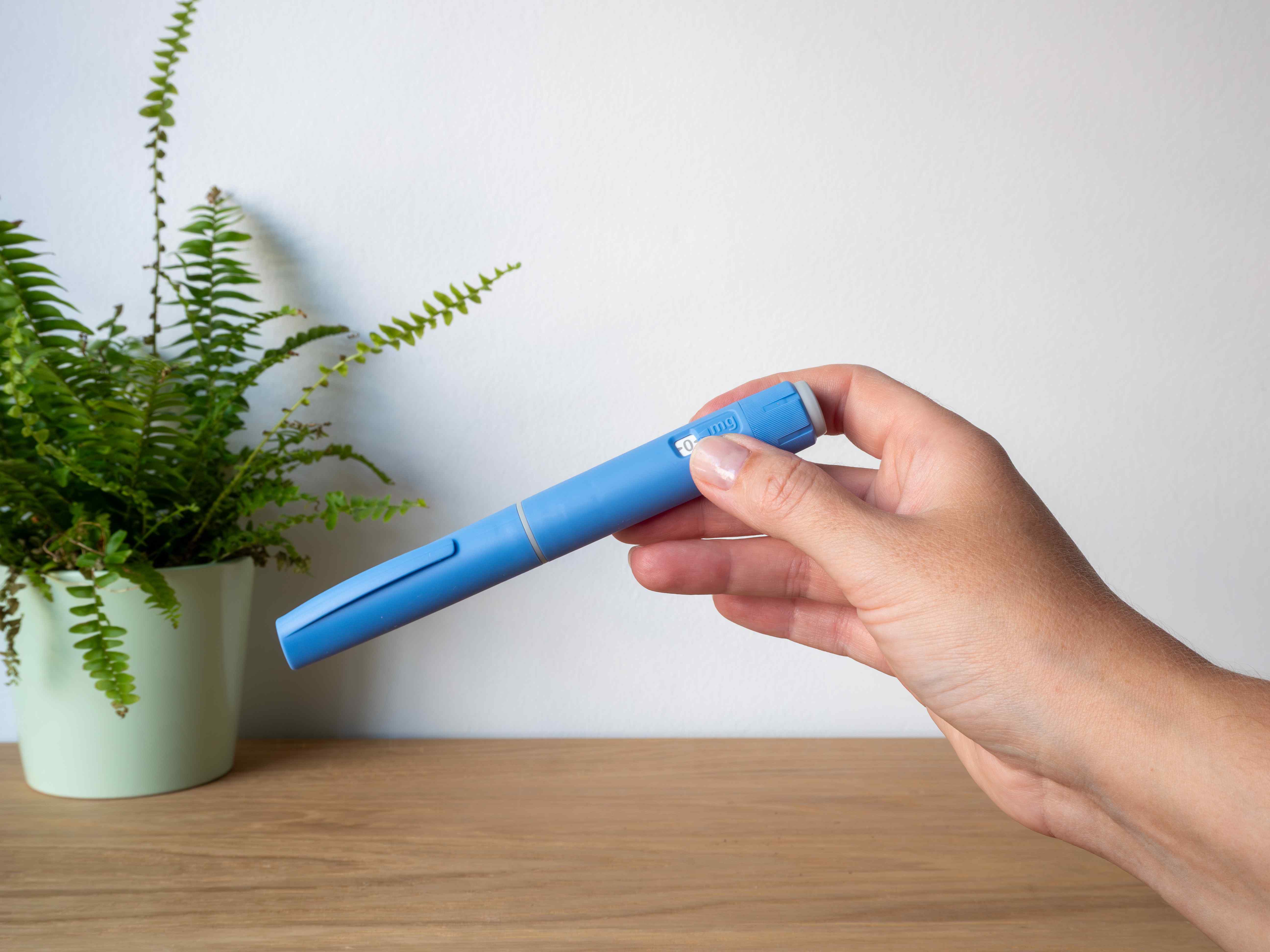
Zepbound is a once-a-week injectable medication that comes in a pre-filled pen, so you can administer it yourself at home even without medical training.
Now, how Mounjaro works is exactly the same as how Zepbound works due to both containing the exact same molecule: tirzepatide. The only difference is how the FDA classifies them on the label in terms of their intended use.
Mounjaro is approved by the FDA to treat type 2 diabetes, while Zepbound is approved as a treatment for chronic weight management and obstructive sleep apnea.
The Two Hormones Zepbound Mimics
Tirzepatide mimics GLP-1 and GIP, two hormones naturally produced in the gut. Let’s take a closer look at these hormones and how they influence the body’s metabolism.
GLP-1
The functions of GLP-1 include telling the pancreas to release more insulin, reducing hunger by signaling your brain to stop eating, and keeping your stomach full for longer by slowing the rate at which the stomach empties into the intestines.
GIP
GIP also has an effect on reducing hunger, but to a lesser extent compared to GLP-1. GIP also promotes insulin release after you eat, helping your body clear sugar from the bloodstream.
Finally, GIP plays a role in how your body processes and stores fat from food, and research suggests activating it may help fat tissue handle nutrients more efficiently. Basically, both GLP-1 and GIP help to improve the communication of key metabolic hormones to help with weight management and blood sugar control.
How Zepbound Differs From Semaglutide
Comparing semaglutide vs tirzepatide is tricky work as both medications are very similar. However, semaglutide only activates GLP-1 receptors, while tirzepatide activates both GLP-1 and GIP receptors, so it exerts a wider range of effects and your prescriber may choose it over semaglutide as your treatment for a multitude of reasons.
What Zepbound Does in the Body
Now that we’ve gotten the fancy hormone names out of the way, let’s break down exactly what these hormones do. In other words, here’s what happens when you take an injection of Zepbound.
Slower Gastric Emptying
Zepbound induces delayed gastric emptying. As a result, you will feel fuller for longer, allowing you to eat less more easily, delay cravings, and eat fewer calories over time.
Appetite and Satiety Signaling
Zepbound acts on areas of the brain that signal when you’re satisfied, which can help you feel full sooner. As Dr. Devon Allen, physician and medical contributor at Top Nutrition Coaching, explains, “By mimicking natural gut hormones, GLP-1s interact with the brain, essentially telling the brain that you are not hungry anymore, and this quiets down the brain’s ‘food noise.’ This process helps you to not think about food as much as you would otherwise.”
Blood Sugar and Insulin
During digestion, Zepbound sends a message to the pancreas to release more insulin when nutrients enter the bloodstream. Following a meal, this helps lower your blood sugar more quickly.
It is normal for the liver to release stored sugar into the bloodstream between meals to give you energy when you are not eating. Zepbound lowers glucagon, the hormone that triggers this release, when blood sugar is high. In this way, Zepbound helps to keep blood glucose in ranges that are healthier for you.
Zepbound for Sleep Apnea
Due to Zepbound’s effects on weight reduction, it is also approved as a treatment for moderate to severe obstructive sleep apnea (OSA) in adults with obesity. With less excess fat tissue in the neck area to compress the airway, it’s been shown to be an effective treatment for the condition.
How Long Does Zepbound Take to Work?
Prescribers typically start Zepbound at 2.5 mg once a week. While this dosage is quite low, it is necessary so that your body can adjust to the medication and side effects are monitored.
The dose is typically increased in 2.5 mg steps after at least four weeks if you are adjusting well. However, if you are not tolerating the side effects well or you are achieving favorable results on a low dose already, your prescriber may choose not to increase your dose.
If you’re wondering how long it takes for GLP-1s to work, it really depends. First off, it takes about four weeks for the medication to reach steady levels in your blood, and because you start on a low dose, it may take a few months to see the full effects.
If progress stalls, there are several reasons why you might not be losing weight on Zepbound. One could be that the medication and dosage are simply not the right fit for you, which is why maintaining open communication with your prescriber is key.
What the SURMOUNT Trials Showed
The SURMOUNT trials are clinical studies funded by Eli Lilly and Company, the manufacturer of tirzepatide, to evaluate how safe and effective the medication is for weight management. Below, we go over the results of what they found when studying Zepbound.
Zepbound Weight Loss by Dose
The SURMOUNT-1 trial showed that adults with obesity, or overweight with at least one weight-related condition, and without diabetes lost an average of 15% (5 mg), 19.5% (10 mg), and 20.9% (15 mg) of their starting body weight over 72 weeks, compared with 3.1% with placebo. There is no guarantee that individual outcomes will be the same as those in the trial.
What Happens When You Stop Zepbound
The SURMOUNT-4 trial explored whether continuing Zepbound helped adults with obesity or overweight maintain their weight loss. Participants first took the maximum tolerated weekly dose of 10 mg or 15 mg for 36 weeks and lost an average of 20.9% of their starting weight.
Those who then switched to a placebo regained an average of 14% of their weight over the next year, while those who continued Zepbound lost an additional 5.5%. It’s important to remember that these are simply averages from a study group and may not reflect your individual experience.
Zepbound and Muscle Loss
In a SURMOUNT-1 substudy, dual-energy X-ray absorptiometry (DXA) scans showed that people taking Zepbound lost an average of 33.9% of their fat mass and 10.9% of their lean mass over 72 weeks, with about three-quarters of the weight lost coming from fat.
This is important as muscle loss on GLP-1 medications is common, but there are strategies we’ll discuss later to help address this.
Zepbound Side Effects and Why They Happen
For those just starting out on Zepbound or those who have recently increased their dose, GLP-1 side effects are common. If side effects become hard to deal with, always talk to your prescriber about the possibility of adjusting doses or stopping the medication, if necessary.
GI Side Effects and Fatigue
Due to the medication’s mechanism of keeping food in the stomach for a longer period of time, gastrointestinal (GI) symptoms like nausea and vomiting are common. Constipation and diarrhea are also common, likely due to changes in how food moves through your digestive tract.
When appetite is reduced, the intake of food and water is also reduced. This can result in significantly lower calorie intake and dehydration, which is why some may report fatigue while using Zepbound.
Less Common but Serious Risks
Serious complications are relatively rare while using Zepbound, but they do require immediate medical attention if experienced. As Dr. Allen explains, “Less commonly, side effects can be more serious and include cholecystitis (gallbladder inflammation), pancreatitis (inflammation of the pancreas), and acute kidney injury (from dehydration associated with persistent diarrhea and/or vomiting).”
Gallbladder problems are linked in part to rapid weight loss, while the exact cause of pancreatitis with these medications isn’t fully understood.
Zepbound also carries a boxed warning for thyroid C-cell tumors based on studies in rodents, and it isn’t recommended for people with a personal or family history of medullary thyroid carcinoma or multiple endocrine neoplasia syndrome type 2 (MEN 2).
Nutrition Support Alongside Zepbound
Participants in the SURMOUNT trials didn’t use Zepbound in isolation. Proper diet and physical activity were included in the treatment plan, and Zepbound’s FDA label specifies use alongside a reduced-calorie diet and increased physical activity.
Real-world programs that include dietitian support with GLP-1 treatment also report meaningfully greater weight loss than medication-only outcomes.
Protein and Muscle Preservation
The double-edged sword of taking a weight loss medication is that it makes overeating harder by reducing hunger, cravings, and overall food intake.
The problem is that eating enough protein to gain or maintain muscle mass can be difficult when hunger subsides. As a result, muscle along with fat loss can be common while on these medications, so it’s a good idea to work with a registered dietitian.
Eating to Manage GI Symptoms
Knowing what to eat and avoid on Zepbound can be critical while on your GLP-1 journey. GI side effects are a common reason people stop GLP-1 medications early.
So, knowing not only what to eat, but when to eat, can help you stay on the medication and feel better while taking it.
Hydration, Micronutrients, and Eating Enough
Another thing to keep in mind with a reduced appetite is not only eating enough, but being sure that the food you are taking in has enough nutrition to keep you healthy. After all, weight loss only goes so far if you are not nourishing your body.
So, ensuring your GLP-1 diet contains enough of the micronutrients you need while on your journey is part of the lifestyle changes that can support you while taking the medication.
Paying attention to your water intake is also something to note, as hydration status can be negatively affected by common side effects of GLP-1s like diarrhea. Dehydration can also worsen constipation.
Getting Nutrition Support on Zepbound
It’s important to know that prescribers make medication and dosing decisions, not registered dietitians. That being said, many plans cover nutrition counseling at no cost, and Top Nutrition Coaching connects you with an available RD who can help support your goals. Check if your insurance covers a dietitian today.
Based on current Top Nutrition Coaching client experience, more than 90% of clients have insurance plans that provide coverage for appointments with registered dietitians; however, coverage is not guaranteed.
FAQs
1. Is Zepbound the same as Mounjaro?
Yes, Zepbound and Mounjaro contain the exact same active ingredient, tirzepatide, and are manufactured by the same company (Eli Lilly), but they’re FDA-approved for different uses.
2. How long does Zepbound stay in your system?
Zepbound (tirzepatide) stays in your system for 25 to 30 days (about one month) after your final injection.
3. Why am I not losing weight on Zepbound?
You may not be losing weight on Zepbound (tirzepatide) because you are still on a lower starting dose, you have not created a calorie deficit, or your body is experiencing a natural plateau.
4. What happens if you stop taking Zepbound?
When you stop taking Zepbound (tirzepatide), the medication leaves your body over the course of about 30 days, and your natural metabolic and appetite-regulating signals return. In the SURMOUNT-4 trial, many people regained a significant portion of the weight they had lost.
5. Do you lose muscle on Zepbound?
Yes, taking Zepbound (tirzepatide) can lead to some loss of lean mass as part of overall weight reduction, similar to almost any significant weight loss method.
6. How much protein should you eat on Zepbound?
Research suggests many people taking GLP-1 medications benefit from around 1.2 to 1.6 grams of protein per kilogram of body weight per day, but needs vary by body size, activity level, and health history. A registered dietitian can help you set a target that fits you.