Top Nutrition Coaching is fully dedicated to providing its readers with transparent, accurate, and compassionate information that applies to individuals from every demographic. Our nutritionists adhere to specific guidelines when creating content to ensure that all published materials are most advantageous to our readers. Top Nutrition Coaching has a no-tolerance policy regarding plagiarism.
All materials published by Top Nutrition Coaching adhere to the criteria outlined below:
- When possible, Top Nutrition Coaching only uses primary sources. Only peer-reviewed journals and government and state sites will be used if primary sources are unavailable.
- Our team reviews every article on the Top Nutrition Coaching site on a periodic basis. Our regular review process ensures that we constantly communicate the most up-to-date information about nutrition, health, and wellness.
- All of our content will be thorough and factual but also approachable. Our goal is to help readers learn about nutrition, not to confuse them.
- All of our content is verified by nutritionists and dietitians with certifications and advanced degrees. Every article will include a registered nutritionist or dietitian’s byline.
- None of our content will include false promises or guarantees. Our number one priority is supporting our audience and their health – their needs come first.


What Insurance Covers GLP-1 Medications for Weight Loss? The 2026 Landscape
GLP-1 coverage depends on why the drug is prescribed and what kind of plan you have. This guide walks through each plan type, the new Medicare GLP-1 Bridge, typical approval criteria and how to check your own coverage. It ends with the coverage people often miss: nutrition counseling with a registered dietitian.
Insurance policies and coverage parameters are changing every day, especially where GLP-1 medications are concerned, which makes getting an understanding of your coverage seem overwhelming. In this article, we’ll lay out a drug-by-drug picture, how each type of insurance plan handles it, and share steps on how to find the right answer for you.
What insurance covers GLP-1 for weight loss is dependent on how an insurer classified GLP-1s in their formulary, the name for their list of covered medications. Insurance companies put GLP-1s in two different categories, “prescribed for weight loss” or “prescribed for type 2 diabetes”, despite them having the same active ingredient.
The truth is that, if a GLP-1 is prescribed for diabetes, more than 90% of employers will cover the drug. However, only about 30% of employers will cover them to lose weight, with this percentage steadily declining through 2026.
What "GLP-1 Coverage" Actually Means in 2026
There’s no such thing as blanket coverage for GLP-1 medications. Coverage is dependent on the specific drug, the FDA-approved indication, the specific plan, and the plan sponsor.
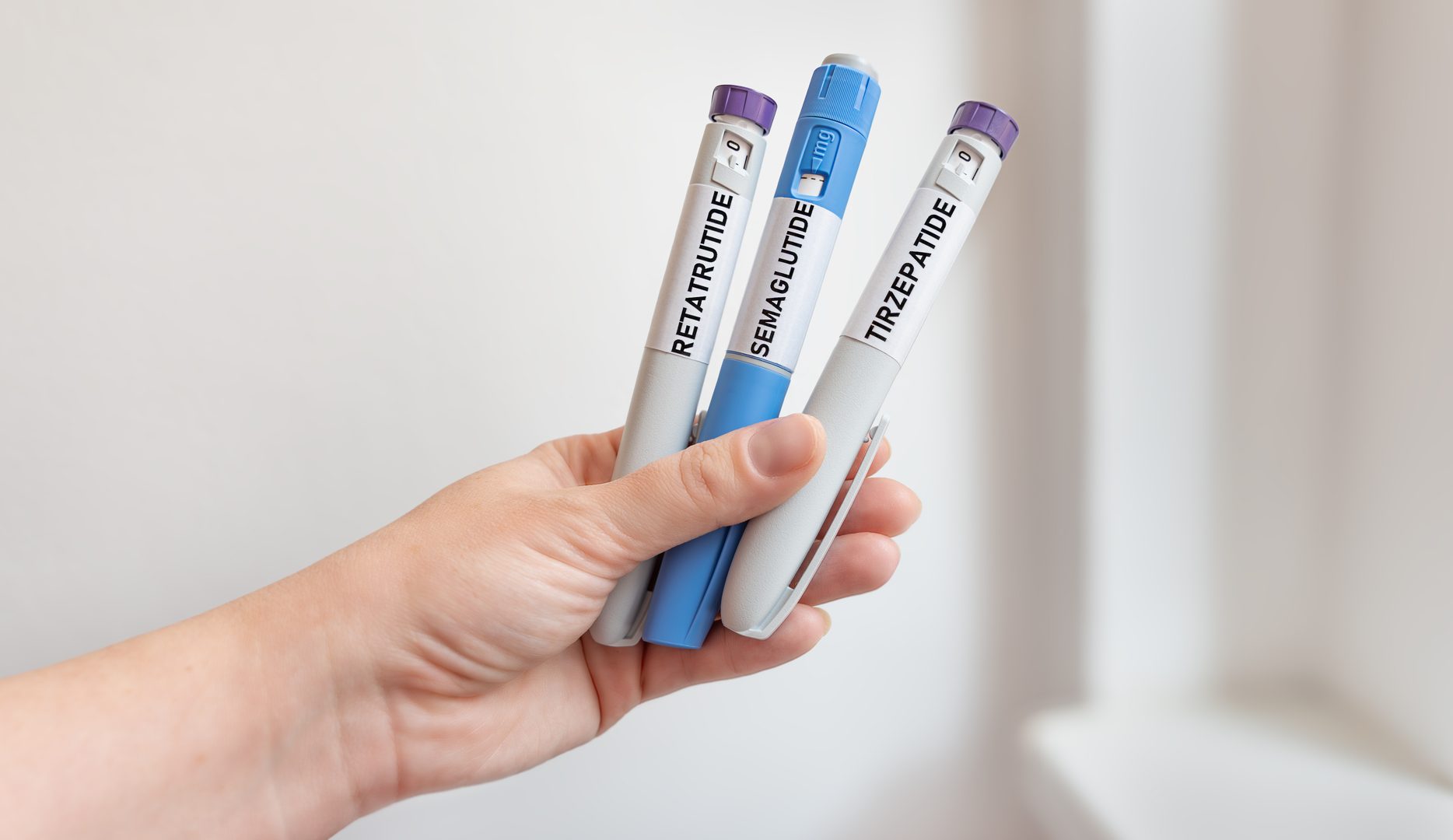
GLP-1 medications belong to a drug class called glucagon-like peptide-1 (GLP-1) receptor agonists. They mimic GLP-1, a hormone your body makes naturally. Dual-action drugs like tirzepatide also mimic a second hormone, glucose-dependent insulinotropic polypeptide (GIP).
Both types of weight loss medications work by reducing appetite and keeping food in the stomach for a longer period of time, thus greatly improving control over the consistency of blood sugars.
There’s also been a new coverage variable introduced in 2026 which is the option of an oral GLP-1 rather than an injection. For example, Wegovy tablets became FDA approved as recently as December 2025. We’ll discuss this distinction as it relates to insurance later on.
The Medications Insurers Treat Differently
Not all GLP-1s are treated the same in the eyes of insurers, which is critical to understand when trying to understand what insurance covers GLP-1 medications for weight loss. A common misconception is that Ozempic and Wegovy are interchangeable for coverage purposes, but this misunderstanding is what usually causes insurance denials that leave people feeling confused.
Ozempic and Wegovy contain the same active ingredient, semaglutide, but each brand name denotes what the semaglutide is treating. This also means they are priced differently as the FDA classifies them as different products with different labels.
Here’s what the difference in the context of insurance looks like:
- Ozempic (semaglutide) - FDA approved to treat type 2 diabetes
- Usually covered by insurance with documentation confirming a diabetes diagnosis
- Wegovy (semaglutide) - FDA approved for weight management
- May be covered if insurance plan includes obesity drugs
- Most plans exclude weight loss drugs entirely from coverage
These are the indications as of September 2026 at the time of writing this article. Keep in mind the FDA regularly updates coverage standards, so these rules are subject to change.
Approved for Weight Management
Among the available GLP-1 drugs for weight management are Wegovy (semaglutide), Zepbound (tirzepatide), Saxenda (liraglutide), and Foundayo (orforglipron). Foundayo is a fresh newcomer to this list, being an oral GLP-1 that was just approved in April of 2026.
However, some of these drugs may have second indications that could open up alternative pathways for insurance coverage. For example, Wegovy has been shown to be effective at reducing risk of heart disease and Zepbound can help improve moderate-to-severe sleep apnea.
These indications mean a plan that restricts coverage for weight loss drugs could cover the same medication to treat sleep apnea or cardiovascular health. That said, older, non-GLP-1 weight loss products like orlistat are usually “preferred” interventions an insurer may want you to try first before they consider covering drugs like Zepbound.
Approved for Diabetes Only
How semaglutide and tirzepatide compare depends on their usage and what your prescriber believes is best for your health needs. Like semaglutide, tirzepatide is another GLP-1 sold under two different brand names: Mounjaro and Zepbound. However, Mounjaro is approved by the FDA to treat diabetes rather than weight loss, just like Ozempic.
This concept is what introduces the idea of using off-label GLP-1s. Off-label drugs like Ozempic are defined as being used for a purpose that is not what’s listed on the label. So since Ozempic is intended for diabetes according to the FDA, if it is considered off-label if it is used for weight loss.
However, in these cases, most pharmacy claim edits flag these and this also likely means insurance plans won’t pay for it. Ultimately, it is up to your prescriber to decide what diagnosis classification is most appropriate for your prescription of GLP-1s.
Compounded and Off-Label Semaglutide
The main difference between off-label medications and compounded medications is that off-label medications are still FDA-approved drugs, while compounded medications are not regulated by the FDA.
When the FDA declared a shortage of GLP-1 medications, pharmacies were legally allowed to produce their own custom-made versions of the drug. During this time, a market for lower-cost weight loss drugs grew exponentially and, though the shortage was resolved in 2025, compounded versions from that period are still being sold.
Now, the FDA has ordered compounding pharmacies to stop producing their versions and has wound down enforcement of this order which has significantly narrowed the legal space. For this reason, insurance almost never covers compounded GLP-1s because they are not FDA approved products, so the people you know who are using them are paying out of pocket.
It’s important to know that without FDA regulation, these drugs are not screened for manufacturing quality, safety, potency, or effectiveness. This does by no means guarantee that the medication won’t work or will harm you, but differences between sellers in dosing instructions does present its own set of risks.
Why the FDA Indication Drives Everything
Insurance plans build their formularies around approved FDA indications, so the diagnosis code on the claim (i.e. what the medication is being used for) is what determines payment. This is why plans require prior authorization for weight loss indications more frequently than authorization for diabetes indications.
So if you were to ask your prescriber one thing to get to the bottom of cost, don’t ask if a drug like Mounjaro is covered. You want to ask “is Mounjaro covered for me on this plan for this diagnosis?”
If you are dealing with multiple conditions, you likely have more than one pathway to coverage available. Common conditions that apply here include obstructive sleep apnea, history of heart disease, and obesity plus type 2 diabetes. The documentation provided by your prescriber determines which pathway is used.
Commercial and Employer Coverage: The 2026 Picture
In 2025, the share of employers covering weight loss medications was roughly 72%, but dropped to around 60% in 2026. Only around 36% cover GLP-1s specifically for obesity, but compare this to the 90% of employers who cover them for diabetes.
If you’re wondering the reason for such big gaps in coverage, it’s because of cost pressure. In 2023, GLP-1s only made up 7% of annual claims, but jumped to 11% in 2026. Consequently, employers tightened up coverage requirements as a result of the popularity of GLP-1s, an objectively expensive drug.
A sizable chunk of employers that cover GLP-1 for weight loss have expressed they may not continue coverage as of the time of writing, September 2026. So, if you currently have coverage, do not assume coverage will continue even with the same plan next year. This is why it’s a good idea to check coverage for every open enrollment rather than just once.
Fully Insured vs. Self-Funded Plans
With a fully insured health plan, the employer pays an insurance carrier to provide coverage, whereas a self-funded plan requires the employer to cover employees’ claims directly, typically hiring an insurer to handle administration.
This matters because most larger employers are self-funded and have a lot of freedom to outright exclude the weight management drug category. Even if state laws require coverage for obesity treatment, they may not apply to you as self-funded plans aren’t subject to these state insurance requirements.
Want to know which one you have? Check with human resources, your benefits summary, or look up “plan administrator” vs. “insurer” language in the documents that outline your plan.
Riders, Carve-Outs, and Vendor Requirements
You can modify the coverage of your basic insurance policy by adding an insurance rider that meets your specific needs. The rider is an optional purchase the employer makes to trigger coverage for things like medication for weight management.
Insurance carve-outs are when plans explicitly exclude certain types of benefits or coverage from a category. This is how the large majority of employers not covering GLP-1s for weight loss can exclude the medication rather than through strict criteria.
Through a vendor-channel pattern, coverage can exist only through a speciality pharmacy or designated program. Many people experience this as a seemingly unexplained denial at their regular pharmacy.
“Does my plan have a weight-management drug exclusion?” is the most efficient question to ask your plan if you want to know your odds of getting a GLP-1 covered. Know that some employers may also add requirements for them to agree to continued coverage, such as enrollment in a lifestyle or nutrition program.
Marketplace and Individual Plans
Individual and Marketplace plans do not consider weight management drugs to be part of essential health benefits requirements, so they set their own rules. Before enrolling, first make sure you open the formulary document from the plan listing and search for the specific drug name like (i.e. Zepbound) and its active ingredient (i.e. tirzepatide).
A plan's metal tier (Bronze, Silver, Gold, or Platinum) affects how much you pay out of pocket, not whether a drug is on the formulary. This document will also tell you prior authorization, step therapy, and pharmacy-restriction flags which all affect access along with the coverage decision.
Medicare & GLP-1s: What's Covered, What Isn't, and the Bridge
Medicare Part D has historically had a reputation for excluding GLP-1s for weight loss, so for years it’s been standard to not even consider it as an option. However, exclusion is determined by the indication, not the drug class. This is how diagnosis-based pathways can be available.
Even Medicare Advantage plans that include Part D drug coverage follow the same rules, so an Advantage plan doesn’t provide a route to coverage, either. To anyone with Medicare, manufacturer copay cards are a no-go also, so check below to see if more realistic Medicare options are available to you.
Part D Coverage by Diagnosis
Conditions including type 2 diabetes, moderate-to-severe obstructive sleep apnea, and/or noncirrhotic MASH with moderate-to-advanced fibrosis are all Part D-eligible indications. So, as an example, the sleep apnea indication gives a pathway to tirzepatide's weight-management brand while heart disease applies to semaglutide.
Even for eligible indications such as these, though, Part D plans still apply their own formulary, tiering, and prior authorization. Since formats and formulations are listed separately, search your plan’s formulary by brand name and active ingredient to see what your plan includes.
The Medicare GLP-1 Bridge Demonstration
There is a CMS demonstration (also called a Medicare demonstration project) running July 1, 2026 through December 31, 2027. As part of this project, qualifying Part D beneficiaries have access to certain weight loss GLP-1s at a flat rate of $50 per month, regardless of their income, outside of the normal Part D benefit.
These products could include Foundayo, Wegovy, or Zepbound, but only certain formulations of the drugs qualify. For example, tirzepatide’s weight management brand is only available under Medicare in the KwikPen format.
Now here’s where the eligibility rules swap: beneficiaries with type 2 diabetes, moderate-to-severe obstructive sleep apnea, or noncirrhotic MASH with significant fibrosis are not eligible for the Bridge.
This is because they already have a Part D pathway for those diagnoses. Another rule to be aware of is the $50 monthly payment doesn’t count toward the deductible for Part D, nor does it go toward the annual out-of-pocket cap.
Medicaid GLP-1 Coverage Varies Significantly by State
State Medicaid programs are unique because covering drugs for weight loss is optional while coverage for other medically accepted indications (like diabetes) is required.
That said, only a limited number of state programs cover GLP-1s for obesity, and that number went down even further through 2026. Prior authorization and quantity limits are close to universal even where coverage does exist.
If you want a better picture of your state programs and the preferred drug lists, check out this state-by-state tracker.
States That Currently Cover GLP-1s for Obesity
Around a dozen or fewer state Medicaid programs covered GLP-1s to treat obesity as of mid-2026, which includes some Midwestern and Southern states. Check the tracker above for the most updated list of states that offer coverage and know that the list does change on a rolling basis.
These changes are actually common, so what you find is the case for coverage one day may not apply by the next time you check. In fact, several states got rid of coverage for GLP-1s to treat obesity early in 2026, one state ended coverage in the middle of the year, and at least one state dropped coverage, but reinstated it within months.
Why States Keep Adding and Dropping GLP-1 Coverage
The spending on GLP-1s has increased sharply alongside its popularity, so the medication has popped up as a significant line item in state Medicaid budgets recently. This has caused a tightening of the purse strings that reflect in the reversals of coverage.
States have also dealt with more strict prior authorization, BMI restrictions, and required participation in lifestyle programs rather than outright removal. One thing that has the potential to change state math, however, is federal initiatives.
These include a CMS innovation model to negotiate lower obesity-drug prices for Medicaid, and the most-favored-nation pricing arrangements extending discounted GLP-1 pricing to state programs. Just note that these are not settled coverage, but in-progress policies.
The Federal Pricing Deals and What Comes Next
As of September 2026, what has been agreed upon is most-favored-nation pricing arrangements with the GLP-1 manufacturers, setting a $245 per month price for injectable GLP-1s for Medicare across doses and indications, with that price also offered to state Medicaid programs.
You'll find that direct-to-consumer GLP-1s and vials on federal purchasing platforms cost around $350 per month on average, which has trended toward $245 over roughly two years. Oral GLP-1 commitments that are approved for weight management fall at around $150 per month for a starting dose.
As you can see, the oral option of a GLP-1 makes getting the molecule far more accessible in terms of plan economics for those who qualify. However, be wary: the announced pricing has not always lined up with what’s actually available on the announced timeline.
Also, these arrangements did not automatically extend to employer-sponsored insurance plans, so be sure to re-check coverage at every open enrollment. This is also due to the fact that employer coverage for weight loss contracted during 2026, even though public-program access expanded.
Typical Coverage Criteria Across the Class
The criteria for GLP-1s for weight management are surprisingly consistent across the last despite differences in insurance plans.
The common structure is an FDA-label-aligned BMI threshold, documentation of independent efforts at weight management and at least one weight-related condition (such as sleep apnea) where BMI is below 30, and no contraindications.
It comes at a surprise for most people to know at the six- or 12-month mark, for reauthorization, many plans will only continue to pay if provided with documented weight loss at a set milestone.
With this though, it’s vital to know that if you do not reach this milestone, that doesn’t mean it’s a verdict on your health or effort. These guidelines are simply how plans budget within their administration.
BMI and Comorbidity Thresholds
The thresholds that plans look at when making coverage decisions are as follows:
- BMI of 30 or higher
- BMI of 27 or higher with at least one weight-related comorbitiy such as hypertension, dyslipidemia, type 2 diabetes, or obstructive sleep apnea
These comorbidities are not something mentioned in conversation with your prescriber and have to be in the medical record as a coded diagnosis. This is a frequently occurring and easily fixable reason for denial.
As far as BMI goes, this parameter is monitored by plans requesting documentation of BMI across multiple visits or for a period of months in order to decide how you qualify.
Documented Weight-Management History
It can vary between plans, but generally, they want to see a documented period, often three to six months, of supervised diet, activity, or behavioral weight-management effort. Some plans specifically look for documentation of nutrition counseling.
So, working with a dietitian can generate the records a prescriber can use to help justify coverage. If this sounds like just an additional cost to the process, you can check whether insurance covers visits with a registered dietitian.
Documentation of a history of nutrition counseling can help strengthen your case for coverage. Keep in mind, though, simply getting nutrition counseling doesn’t guarantee approval as the decision for coverage lies completely with the plan. You should also bring records from prior clinicians, programs, or health tracking apps to your appointment.
Continuation and Reauthorization Rules
Reauthorization is a possibility with many plans, but only if you have reached a certain threshold of weight loss by a set point. Usually this would be around 5% of your starting body weight, which is typically attainable for those on GLP-1s according to studies conducted using tirzepatide.
Now for others, through no fault of their own, may not respond well to a GLP-1 which can end in them losing coverage mid-treatment. This is a genuinely difficult situation, but it is possible nonetheless.
Implementing lifestyle changes like resistance training and proper nutrition to take in adequate protein and maintain muscle mass matters both clinically and, more indirectly, for keeping a treatment plan you can sustain. This does not mean nutrition support ensures reauthorization, but it can be helpful for those who are seeking it.
Step Therapy and Preferred Products
Some plans will require you to trial a cheaper, preferred alternative to GLP-1 medications before authorizing them for coverage. If these alternatives, like a different GLP-1 or an older weight-management medication, are not well-tolerated or ineffective, it can strengthen your case for authorization through your plan.
Preferred-product designations may move around at plan-year boundaries and after rebates have been negotiated, so whatever was the case last year may not be the case currently. A prescriber can also request an exception for authorization with a supporting statement of medical necessity, with this being a typical part of the process rather than a special favor.
How to Find Out What Your Own Plan Covers
Here’s what to do, in order, to find out about your coverage:
- Log into the member portal
- Open the current plan-year prescription drug list
- Search the brand name and the active ingredient
- Note tier plus any prior authorization, step therapy, or quantity-limit flags
- If you still have questions, call the number on the back of the card with these two questions:
- Is [drug] covered through my plan for chronic weight management, at what tier, and does prior authorization or step therapy apply?
- Does my plan have a weight-management drug exclusion?
- This is a question most people miss, but is crucial to avoid surprises as a category carve-out means a different strategy than a criteria denial.
- Is [drug] covered through my plan for chronic weight management, at what tier, and does prior authorization or step therapy apply?
If you are told that one drug is indeed excluded, it is also worth it to ask about the others in the class – do not stop at the first no. They are there to answer questions like these.
When you’ve finished speaking with a representative, be sure to record their name, the date you spoke, and the reference number. This is to cover yourself in case disputes happen as well as a good time stamp in case answers and plan rules change.
If Your Plan Doesn't Cover GLP-1s
The highest value path to pivot to is an appeal. Your first step should be to read the reason for the denial, request the plan's written coverage policy, and work with the prescriber's office on an appeal to close the specific documentation gap.
Direct cash pricing for brand products has fallen significantly, but specifics of cost are beyond the scope of this article. That said, HSA and FSA eligibility can be a way to pay with pre-tax money.
Even if the medication is not covered, services like nutrition counseling, obesity screening, behavioral counseling, and diabetes-indicated therapy (if applicable) could still be covered to help you manage weight. Even without access to a GLP-1 through insurance, these services can still help you reach your goals while being covered more reliably.
The Coverage Most People Overlook: Nutrition Counseling
The majority of private insurance plans must cover obesity screening, behavioral counseling, and nutrition counseling for adults with weight-related risk factors as part of the preventive services rule.
Limits are set by plans based on visit counts, the type of provider, and setting of care. So, just because something is covered doesn’t mean there is unlimited access. This matters because, clinically, the decline in appetite that comes with GLP-1 treatment makes it easy to underconsume protein, fall short on micronutrients, and lose muscle mass along with fat mass.
Another benefit that comes with nutrition support is the ability to address and manage the common GI side effects that come with starting GLP-1s such as nausea and constipation. These effects can lead to people discontinuing treatment prematurely before they’ve reached their goals, knowing what to eat while taking a GLP-1 medication can be critical.
How Top Nutrition Coaching Can Help
You can check today to see if your plan covers nutrition support which is a process that doesn’t take nearly as much time as confirming whether a GLP-1 is covered or not. The answer is also typically more reliable.
Top Nutrition Coaching connects people with independent licensed registered dietitians and handles the administrative layer, including insurance verification. They do not make coverage or medication determinations, however, nor do they prescribe, adjust, or manage medication. These are all in the hands of your prescriber.
Many plans do cover nutrition counseling at little or no out-of-pocket cost to you, but coverage varies widely depending on your plan. Check if your insurance covers a dietitian today to get access to virtual and flexible nutrition counseling.
Frequently Asked Questions
Does insurance cover GLP-1 medications for weight loss in 2026?
Insurance coverage for GLP-1 medications used strictly for weight loss is mixed and increasingly restricted in 2026, though a new Medicare pilot program now offers limited access.
Why does my plan cover Ozempic but not Wegovy?
Your insurance covers Ozempic because it is approved by the FDA to treat type 2 diabetes, but it may deny Wegovy because many health plans exclude or restrict medications prescribed strictly for weight loss.
What's the difference between Zepbound and Mounjaro for insurance purposes?
Insurance covers Mounjaro for type 2 diabetes, whereas Zepbound requires separate weight loss or obesity benefit approval. Even though both contain the exact same active ingredient (tirzepatide), insurance companies treat them as entirely different medications based on their FDA-approved labels.
Do most employers cover GLP-1s for weight loss?
No, most employers do not cover GLP-1 medications specifically for weight loss, though coverage varies significantly depending on the size and type of the company.
Does Medicare cover GLP-1s for weight loss, and what is the GLP-1 Bridge?
Regular Medicare Part D plans do not cover GLP-1 medications when used solely for weight loss, but eligible beneficiaries can access specific weight loss drugs for a flat $50 monthly copay through the temporary Medicare GLP-1 Bridge program.
Which state Medicaid programs cover GLP-1s for obesity?
As of mid-2026, roughly 11 to 13 state Medicaid programs provide coverage for GLP-1 medications (such as Wegovy or Zepbound) specifically for obesity and weight management, following recent rollbacks and restrictions due to high costs.
Do Marketplace plans have to cover weight loss medications?
No, federal rules do not require Affordable Care Act (ACA) Marketplace plans to cover weight loss medications.
What BMI do I need for a GLP-1 to be covered?
You generally need a BMI of 30 or higher, or a BMI of 27 or higher with a weight-related health condition, for commercial insurance to cover a GLP-1 for weight loss.
Does insurance ever cover compounded semaglutide or tirzepatide?
Health insurance companies virtually never cover compounded semaglutide or tirzepatide.
What is step therapy, and can I get around it?
Step therapy is an insurance rule that requires you to try a lower-cost, preferred medication before your health plan will cover the specific drug your doctor prescribed, often called a "fail first" protocol.
Can my plan stop covering my GLP-1 if I don't lose enough weight?
Yes, your insurance plan can stop covering your GLP-1 medication if you do not show sufficient weight loss during reauthorization reviews.
Will insurance cover nutrition counseling even if it won't cover the medication?
Yes, health insurance can cover nutrition counseling even if it denies coverage for weight loss or metabolic medications.
.webp)